• Home
  • Design
  • Gallery
  • Contact
  • Blog
  • About
Menu

Matt Geiger

  • Home
  • Design
  • Gallery
  • Contact
  • Blog
  • About

Who are my learners?

February 4, 2020

What can we teach about civic engagement?

Last week our teams mapped out the stakeholders for our chosen topic (citizenship and grassroots).
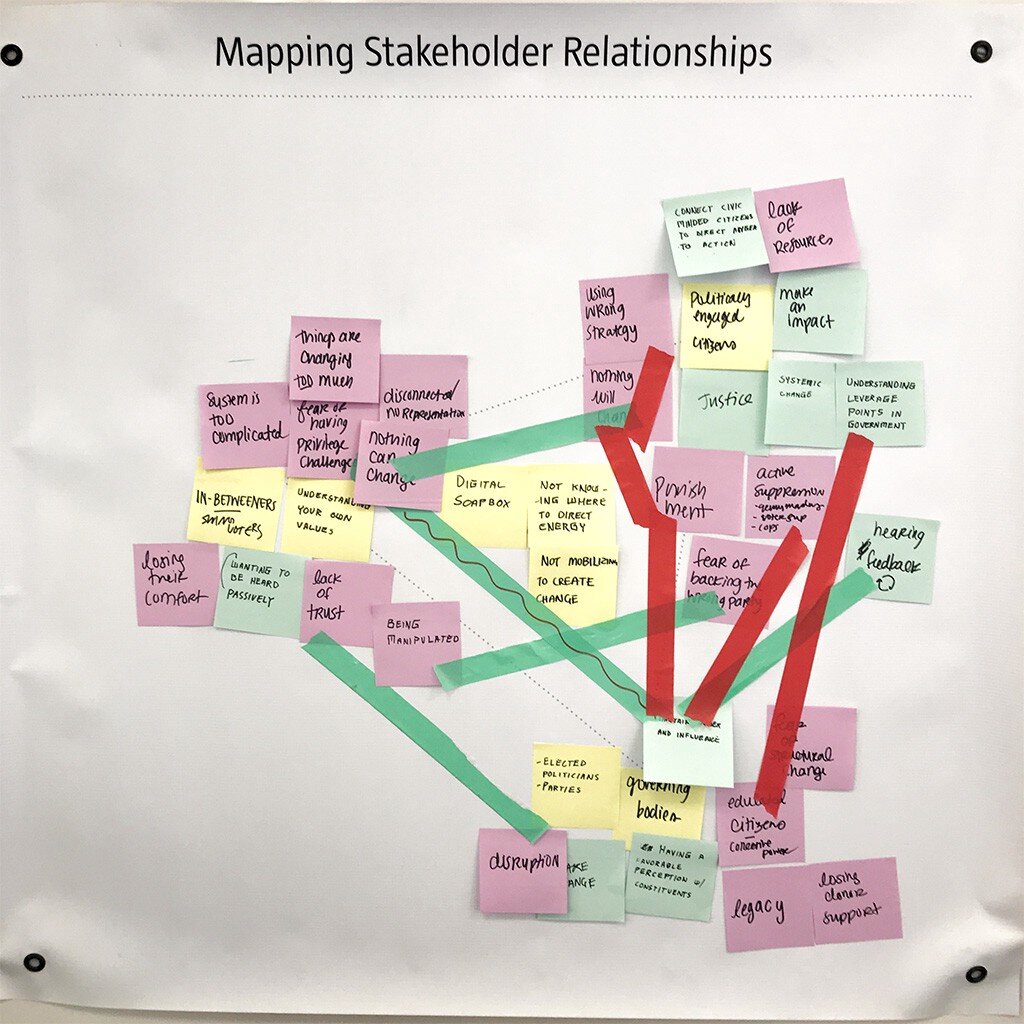
Our stakeholder map was stolen from the studio. This was the last picture taken before it went missing. If have any information, call: 1-800-STOLEN-MAP No questions asked if you return it. Really, at this point we all just want closure.

Our stakeholder map was stolen from the studio. This was the last picture taken before it went missing. If have any information, call: 1-800-STOLEN-MAP No questions asked if you return it. Really, at this point we all just want closure.

By looking at the tension between groups, we can easily get overwhelmed. What was most helpful was to recognize where common interests exist between stakeholders. These should provide opportunities for engagement, or perhaps even leverage points between groups in conflict (or perceived conflict). Additionally, we identified a disturbing aspect: asymmetry. While there were mutual and shared interests between our three groups, there were also some goals that actually provided benefits at the expenses of others.

The easiest way to understand this dynamic is to think about big tobacco. Smokers want and desire cigarettes. They are willing to pay for them, even when discouraged through taxation. They smoke throughout the day, despite knowing that it has a negative impact on health. Who benefits the most in this relationship? In the short term, the smoker benefits. In the long term, the tobacco companies benefit. These relationships are exploitative, but also difficult to break.

Reactionary politics benefit a minority of the powerful at the expense of everyone else, but it also provides validation to a cynical and disengaged citizenry. For those who insist that politics is self-serving, and incapable of providing value to the public, it is very easy to be proven correct, even if the outcomes that produce that validation are not beneficial.

In Education, Personal, Politics, Process Tags Education, Learning Experience Design, Learning, LxD, Civics, Civic Engagement, Citizenship, Politics, Design
← Tackling the challenges for our learnersConsidering stakeholders →

Latest Posts

Featured
April 20, 2025
Yes, Virginia, trans rights are human rights
April 20, 2025
April 20, 2025
April 3, 2025
A Practical Guide to "Vibe Coding" with Claude and MCP Tools
April 3, 2025
April 3, 2025
April 2, 2025
"Liberation Day" Where do we go from here?
April 2, 2025
April 2, 2025
December 30, 2024
Jimmy Carter
December 30, 2024
December 30, 2024
December 22, 2024
A Bicycle for the Mind
December 22, 2024
December 22, 2024
December 22, 2024
Learning Through Building: Adding Sort & Translation Features to a Food Pantry Web App
December 22, 2024
December 22, 2024
November 3, 2024
Video Lecture: 3D Modeling Basics for Beginners – Techniques, AR Tips, and Intro to AI Tools
November 3, 2024
November 3, 2024
October 13, 2023
HAVE QUESTIONS? ASK PHIL
October 13, 2023
October 13, 2023
September 17, 2022
TUTORIAL: How to use ultra realistic Quixel Mixer materials with Fusion 360 [Part 2]
September 17, 2022
September 17, 2022
August 13, 2022
TUTORIAL: How to use ultra realistic Quixel Mixer materials with Fusion 360 [Part 1]
August 13, 2022
August 13, 2022

© 2023